Houston’s skyline tells a story of ambition, hospitality, and light. Luxury towers rise from Downtown to Uptown and the Museum District, each with its own posture, from faceted glass spires that mirror Gulf Coast skies to limestone silhouettes with terraces that feel more like private clubs than balconies. Photographing these buildings is not only about sharp frames and symmetrical lines. It is about context. Buyers want to understand what a residence feels like at 7 a.m. When the sun slides past a neighboring tower and touches a breakfast nook, or how the city glows from a 40th-floor loggia just after a summer storm. That is the gap Luminis Media fills with disciplined aerial work, precise MLS photography, and editorial-level videography that respects both the architecture and the rules that govern it.
What makes Houston’s luxury towers photogenic
Luxury residences in Houston are not clustered along a single waterfront or ridge. They are woven into districts with distinct moods. Market Square Tower observes the city’s heritage warehouses and the Bayou’s green arc. Galleria’s modern towers trade in glamor and retail convenience. Around Rice and the Museum District, towers approach a softer, leafy texture. Because the settings differ, the most compelling images do not repeat a formula. A downtown glass tower can handle dramatic reflections and colder balance, while a River Oaks residence often benefits from warmer tones, shallow angles, and a whisper of oak canopy.
Aerials expand that reading. A drone vantage connects a penthouse terrace with the course of Buffalo Bayou or the proximity to Memorial Park trails. It shows the drop from porte cochère to valet circle, the exact position of the pool deck, how a dog park receives afternoon shade, and the sightlines past or over neighboring rooftops. Luminis Media drone real estate photography is built to answer those location questions with frames that do not feel technical. They feel lived in, even when shot from 300 feet.
The vantage only drones can provide in Houston
Ground-level listing photos have to negotiate sidewalk clutter, traffic, and tree canopies that shield much of a façade. Helicopters used to be the only way to reveal massing and siting. Drones changed that, but not all aerial angles are equal. Glass towers reward disciplined elevation steps, usually in 10 to 20 foot increments, so the team can observe when a balcony lip hides an amenity or a mullion interrupts a reflection.
For high-rise exteriors, we usually plan three aerial bands. The lower band sits just above treetops or adjacent roofs to situate the property in the block. The mid band ranges from 150 to 250 feet to show stack articulation, terrace rhythm, and amenity decks. The upper band hovers near the legal ceiling, often around 350 to 400 feet AGL where permitted, to pull in the full skyline with the subject centered or slightly offset. That upper view is what out-of-state buyers watch repeatedly. Paired with Luminis Media aerial real estate photography at twilight, those frames create a map of desire rather than a diagram.
Inside, drone use is rare. The safer and more elegant solution is stabilized cameras and gimbals. But for double-height lobbies and sky lounges with 180-degree glass, a carefully flown micro drone under Part 107 rules can produce a slow, floating reveal if property management authorizes a lockout period. The decision is about safety first, then the effect. Many times, luminis.media real estate videography accomplishes the same mood with cranes, sliders, and a steadicam without rotor wash or risk.
Permits, airspace, and building operations
Downtown Houston is dense with helipads on office and hospital towers, which imposes practical and legal constraints. Professional aerial work here begins with Part 107 certification and an airspace read, often via LAANC. Even with approval, proximity to a hospital helipad may require additional coordination or a waiver. Venues like Minute Maid Park and NRG Stadium also introduce event-day flight restrictions. Veteran crews are never surprised by a last‑minute TFR; we build schedules with alternatives.
In Midtown and the Medical Center, the heliport network can be intense. Near Hobby or the IAH surface areas, authorizations are precise, and drift is not tolerated. This is one reason Luminis Media drone real estate photography deploys pilots who treat preflight like a jobsite safety meeting. We check NOTAMs, confirm controller contact details, and diagram return to home paths away from pedestrian routes. Flights launch from secured property whenever possible, often from a terrace or controlled garage level with management approval.
Coordination with a building’s operations team matters as much as FAA rules. Dock masters, valet leads, and concierge staff control traffic flows that can ruin a shot or create hazards. We schedule window washing gaps, pause landscape blowers that kick dust into lenses, and confirm lighting scenes for lobby features. The result is not only compliance, but clean, quiet frames.
Timing, light, and weather on the Gulf Coast
Houston’s humidity acts like a soft filter. It warms and diffuses light, which can be flattering for limestone and stucco, and tricky for blue-tinted glass. On summer mornings, heat shimmer rises by mid-morning over parking lots and low roofs, which bends fine detail at distance. If the brief emphasizes crisp skyline lines, we push drone work earlier to lock in clarity before the road heat builds. In winter or after a cold front, the air is drier and the city looks etched. Those are the days to stretch telephoto aerials that compress layers of towers.
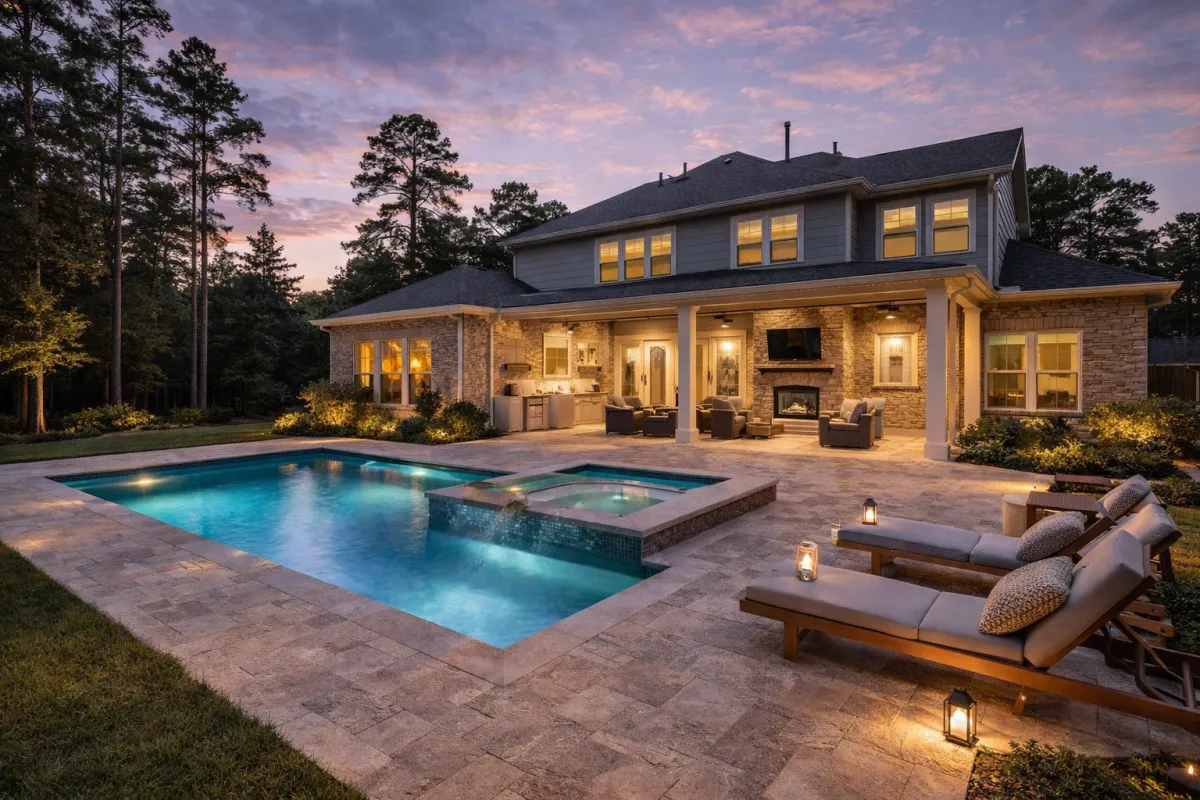
Twilight is Houston’s gift. The window is short, typically 20 to 30 minutes of ideal balance between interior fixtures and the sky. Aerials during this period require advance exposure testing. We meter interiors at the amenity deck first, then set external brackets so the final composite looks believable rather than neon. MLS photography has its own guardrails, but twilight exteriors are generally allowed and consistently outperform mid-day exteriors in click-through rate.
Weather moves quickly. Summer storms can darken the sky by 3 p.m. And clear by 4:30 with saturated colors and double rainbows on the west side. Being nimble helps, but so does realism. A reschedule is cheaper than a replacement flight after wind scuffs a drone into a glass panel. We set a practical wind ceiling depending on the aircraft mass, generally around 18 to 22 mph sustained for smaller drones and higher for heavier platforms, with gust thresholds a bit above that if the site offers lee coverage.
Glass, geometry, and color science
Most luxury towers in Houston employ variable glazing that shifts from cool blue at shallow angles to neutral at head-on. A circular polarizer solves one problem and can create another. With the right rotation, it tames runaway reflections on darker glass but may cause banding on wide horizons as polarization varies across the sky. real estate photography We test with and without, and often shoot two passes at the same elevation so we can choose in edit.
White balance is a judgment call. Houston’s sodium and LED mix gives sidewalks a honey cast while interiors trend from 2700 to 4000 Kelvin. When a lobby glows amber and the exterior reads cyan, amateur edits chase a mythical average that pleases no one. Luminis Media listing photography aims for local accuracy. We hold exterior blues and shift interiors gently warmer, preserving materials. That balance translates well to MLS and third-party portals that compress images aggressively. Luminis Media MLS photography also keeps file sizes and color profiles within platform specs, which avoids muddy tones and unexpected gamma shifts.
Geometry needs respect, not heroics. Tilted towers look cheap. Vertical correction is standard, but overcorrection flattens perspective and steals grandeur. On exteriors, we accept a few degrees of convergence if it communicates height without cartooning the lines. For interiors, we keep verticals neutral, then use furniture and leading lines to introduce motion.
Storytelling that respects MLS rules
An MLS audience scans first, decides if the listing merits more time, then leans in. For towers, the first five images set the hook. They usually include a powerful exterior, an amenity that defines status, a living area with a window wall, a primary suite with a view, and a panorama from the balcony. MLS photography Luminis Media delivers follows platform rules on branding and signage, avoids text overlays, and adheres to quantity and format standards. For private websites and campaigns where branding is welcome, we build a parallel set, often with cinematic crops and color treatments tuned for social feeds.
Across channels, the narrative remains consistent. Aerials establish place. Interiors express craft. Details tell truth. If the tower has an on-site sommelier program, a chef’s kitchen in the club level, or a pet spa that actually functions, we show it in use rather than as a static room. That is where luminis.media listing photography differs from rote documentation. It is editorial without drifting into lifestyle fiction.
Interiors, amenities, and the vertical neighborhood
Buyers of high-rise homes purchase a lifestyle that spans private and shared zones. The unit matters, the building matters more than most agents admit. We document circulation routes a resident will live daily, from the arrival sequence to mailroom, elevator lobby, sky lounge, gym, and deck. Fitness centers often need early morning or late evening sessions to avoid crowds. Pool decks read best two hours before sunset, with tables staged, towels removed, and glassware swapped for safe props that still read elevated. If the rules allow flame, a fire feature during blue hour raises perceived value.
For interiors, we study the daylight arc. East-facing primary bedrooms shine at sunrise. West-facing living rooms are made for golden hour, but glare can be brutal an hour earlier. Blackout shades get a workout. Mixed lighting is inevitable. We lean into it with bracketed exposures that retain window views without erasing the mood. When a space includes LED accent strips or programmable scenes, we set them to a calmer profile to reduce color cast wars in camera and on screen.
Flight plans and site safety around towers
Urban canyons produce unpredictable gusts. Return to home altitudes must clear every roofline on the route, not the nominal building height. We map in three dimensions, with geofencing tolerances understood before arms ever spin. Takeoff points are chosen for shelter and signal integrity, not only composition. A balcony far up may look convenient but can create multipath interference from glass reflections that degrade control links. Safer is a setback terrace or an open garage level.
People on balconies are part of the job. We coordinate notices so residents expect a drone window, and we shrink that window. Sharp crews get what they need in a handful of batteries rather than loitering for an hour. Privacy is not a brand value, it is a baseline. We avoid peering into interiors, angle away from occupied terraces, and never publish frames that feel intrusive.
From raw pixels to persuasive media
Aerial stills are often bracketed five to seven stops and blended manually. Automated HDR can create halos along rooflines and crush midtones. We prefer local dodging and burning to bring out façade depth and amenity textures. For video, luminis.media real estate videography weaves slow aerial arcs with steady interior moves and audio that suits the property’s voice. A River Oaks tower earns a different soundtrack than a sports-forward Downtown residence.
Deliverables are property photography spring tx planned, not guessed. For MLS, we export within size caps to preserve crispness. For developers and building managers, we prepare layered files for long-term signage and brochures. For social, we include short vertical cuts that respect subtitle margins and platform safe zones. Drone real estate photography luminis.media pieces often pair with 9 by 16 shorts that carry the same arc in 20 seconds.
Two brief case sketches
A high-rise near Allen Parkway needed to reposition two penthouses that had lingered. The view is stunning, but the first campaign had emphasized interiors under flat mid-day light. We reset timing, capturing a sunrise aerial set that traced the Bayou’s S‑curve and the Downtown edge lighting up. Inside, we scheduled a twilight sequence with interior fixtures dimmed to match sky luminance. The unit sold within a month, and the developer asked us to roll the approach into a full building package.
Uptown, a glass tower with a jewel-box amenity deck suffered from reflection chaos at certain hours, masking the pool’s edge. We staged at a slightly elevated drone height with a polarizer tuned to reduce the heaviest bands, then stepped 15 feet higher to clear a parapet that had been clipping the waterline. The final frame balanced clear water, skyline energy, and a believable sky, which the marketing team used across placements. Luminis Media listing photography for that property became their reference kit for future releases.
Working with Luminis Media, a simple path that respects your calendar
- Discovery call to define goals, units, amenities, and publishing channels, including any MLS constraints or brand assets. Airspace, permits, and building ops coordination, with flight plans and schedules circulated for approval. On-site production for aerials, interiors, and amenities, with a safety briefing and live previews when needed. Post-production with color-managed edits for MLS, web, print, and social, plus review rounds. Delivery through a shared portal, with ongoing support for re-sizes, captions, and seasonal updates.
This approach scales from a single penthouse to a multi-day tower campaign. For agents focused on speed, luminis.media MLS photography slots into a 48 to 72 hour workflow. For developers, a deeper pass includes talent casting for lifestyle scenes, brand-consistent graphics for lobby screens, and long-form video.
Pricing logic and ROI without the mystery
Budgets vary with scope, complexity, and airspace. A focused aerial and MLS stills package for a condo can sit in a mid three-figure range, while a full tower story with drone video, interiors, amenities, and twilight sessions spans into the low to mid four figures. Add-ons like motion graphics, voiceover, or talent bump totals. What matters is the link between spend and outcome. Where we see consistent lift is in absorption of premium units, reductions in days on market, and higher engagement on platforms that punish weak media.
It is also worth noting the cost of rework. Skipping a twilight because it feels like an extra line item usually shows up as a lackluster hero image that has to be replaced later. Building-wide shoots benefit from clustering similar exposures and reusing lighting setups, which trims hours and improves consistency. Drone real estate photography Luminis Media teams plan that batching from the outset.
Common pitfalls when photographing towers
Rushing exteriors at noon because the crew is on site is the fastest route to unflattering glass, clipped highlights, and a sky that no amount of gradient can rescue. Another misstep is leaning on ultra-wide lenses indoors, which distort proportions and telegraph that a room is tight when it might not be. Lastly, publishing frames that violate MLS rules on branding or include residents without privacy clearance can trigger takedowns or complaints. Luminis Media MLS photography practices anticipate these traps, protecting both the listing and the relationship with building management.
Preparing a luxury tower for an aerial and listing shoot
- Confirm building approvals, resident notices, and amenity access windows, including any music or flame policy for twilight. Stage amenity spaces with minimal, high-quality props, remove clutter like cleaning carts, signage stacks, and pool noodles. Align lighting scenes, replace dead bulbs, and coordinate window washing or landscaping to avoid active work in frame. Provide access to key vantage points, such as a mid-level terrace for takeoff and roof or sky lounge for perspectives. Share marketing priorities, comps, and buyer profiles so the shot list serves positioning, not just documentation.
Good preparation saves hours and yields images that look inevitable rather than improvised. It also reduces resident friction, which makes future shoots welcome.
Where the images live and how they work together
A single campaign can generate four families of assets: MLS stills, aerial stills, short-form social video, and long-form or web video. Each serves a role. MLS assets must be clean, accurate, and fast to load. Aerial stills carry the story of place and help portal carousels stand out. Short verticals populate Stories, Reels, and Shorts, where the audience is both browsing and researching without admitting it. Long-form anchors the website and can run on lobby screens or in a sales gallery.
Real estate videography luminis.media often integrates captions and cutdowns for brokers who need silent autoplay pieces on mobile. Color grade stays consistent across all outputs. Thumbnails matter more than most people admit. We test three to five options for key platforms, because a great video with a weak thumbnail is a car with the parking brake on.
Why this approach fits Houston
The city is sprawling yet identifiable, modern yet distinctively Texan. Buyers could be moving from a nearby townhouse, or flying in from either coast, or buying a pied-à-terre for medical, legal, or energy work. They are sifting not just for square footage but for a sense of competence. Clean aerials signal order. Thoughtful interiors suggest discretion. Together, they suggest a management culture that will keep life running. Luminis Media aerial real estate photography and luminis.media MLS photography grow from that premise, not from a spring catalog of shots.
The trade-offs are honest. Some days, the airspace says no. Some towers shine at sunrise but not sunset. A polarizer helps one elevation and hurts another. We take the measured path, make the call, and deliver a set that respects the building and the people who live in it. That is what agents need when they promise a seller or a developer that media will be their quiet advantage.
A note on neighborhoods and nuances
Downtown and the Theater District carry a skyline backdrop that rewards wide aerials. EaDo introduces stadium mass and event-day TFRs that must be watched. The Galleria folds in retail scale and traffic patterns that clutter curbside arrivals in late afternoon. River Oaks needs deference to canopy and privacy. The Museum District blends green and culture, where dawn exteriors can earn a surprising serenity even on a weekday.
Medical Center towers add helicopter layers, and West University edges closer to neighborhood rhythms where drones must be especially mindful. Across all of this, Luminis Media drone real estate photography and listing photography luminis.media adjust the plan instead of bending the rules. That is professionalism in practice, and it shows in the work.
Final perspective
Great tower media edits time and altitude in favor of story. It answers the questions buyers actually ask when they text a link to someone they trust. How far is the park, really. Where does the sun land on that terrace. What does the lobby feel like when you arrive late, tired, and need it to work. When MLS photography luminis.media pairs with disciplined aerials and a video that breathes, those questions resolve into a yes. That is the point. And in a city that keeps rising, yes is the currency that moves the next deal.