There is a particular way light wraps around glass and steel in Houston. On a clear afternoon, the towers in Uptown mirror a blue sky with a faint haze from the Gulf. At twilight, River Oaks high-rises glow like lanterns. This is where high-end real estate lives, and where listings rise or fall on the strength of visuals. Luminis Media understands that rhythm and builds MLS photography around it, with technique shaped by the city’s weather, architecture, and buyer expectations.
What MLS photography must accomplish in a luxury tower
High-rise listings sell a way of living. A frame must hold more than square footage and finishes. It needs to carry the view, the amenities, and the privacy that a penthouse buyer expects. Luminis Media MLS photography does this by layering three kinds of storytelling. Interiors show scale, materials, and flow. Amenity spaces explain lifestyle, from lobby art to pool decks and dog runs. Context shots position the building within Houston’s skyline and neighborhoods, so a buyer sees where that balcony sits in relation to the medical center, the park, or the Galleria.
On MLS feeds, you have three seconds to earn a click. Neutral, bright images with clean verticals create instant trust. They suggest the listing is cared for and the details are accurate. Agents who prioritize professional visuals report a clear lift in online activity and stronger showing schedules, especially in the first week when momentum is set. The effect is larger with condos because buyers cannot easily drive by to get a sense of the property. The photos become the curb appeal.
A workflow tuned to Houston’s light and materials
Houston brings distinct challenges: long summers with intense sun, winter days with flat light, and year-round humidity that creates glare. Condos layer glass, lacquer, and polished stone, which multiply reflections and color casts. Luminis Media’s approach is technical and patient, with a sequence that respects light first, then lines.
Interiors are photographed with a blend of ambient and off-camera flash. The ambient frame keeps the mood, especially in units where designers have curated warm color temperatures through pendants and sconces. Flash frames correct for color contamination and push detail back into millwork and furniture fabric. The final composite avoids the cartoonish HDR look that can over-brighten shadows and shift wood tones. Window pulls are handled selectively. If a balcony opens to a skyline worth selling, the exposure is built around that view, with a polarizer rotated until glass reflections are tamed without deadening the scene. If the view is obstructed, the exposure protects interior mood and leaves the exterior slightly softer, which is more honest and flattering.
Vertical lines stay vertical. Tilt-shift lenses matter here, particularly in great rooms where floor-to-ceiling glass can stretch lines when a camera is tilted upward. A 24 mm tilt-shift corrects perspective without pushing furniture to the edges in a way that feels unnatural. Kitchens often get a second angle on a longer focal length so barstools look proportional and appliance faces read cleanly. Bathrooms are a reflection puzzle. Glass partitions act like mirrors. A careful position just off axis, plus a feathered flash into the ceiling, keeps the lens out of reflections and preserves the crisp edge of stone.
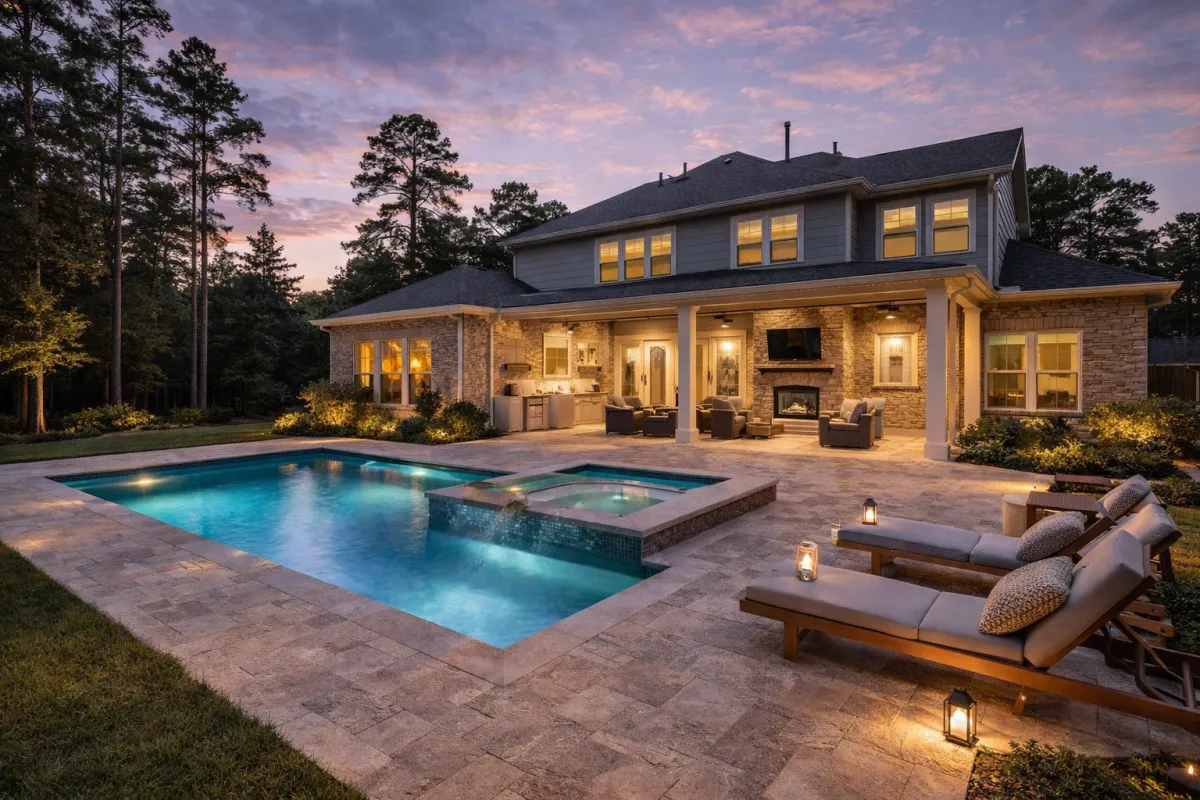
Blue hour exteriors are non-negotiable for luxury towers. Houston’s blue hour tends to last 15 to 25 minutes, depending on humidity and cloud cover. During that window, lobby uplighting comes alive, balcony lights dot the facade, and the sky carries a gradient that adds calm without darkness. Luminis Media plans those sequences by arriving an hour early, setting two or three locked compositions, and then working through a timing script so each angle is luminis.media real estate photographer spring tx captured at the right point in the transition. The result is a set where the hero shot has glow without blown highlights, and the secondary angles still feel intentional.
Where aerial work adds value, and how to do it right
Aerial imagery is not a novelty in Houston anymore. It is a necessary layer for high-rise listings. Luminis Media aerial real estate photography is built on two pillars: compliance and composition. Houston’s inner loop includes controlled airspace around Hobby and, farther west, George Bush Intercontinental influences ceilings on drone flights when you get near certain corridors. Under FAA Part 107, flights must respect airspace rules and local restrictions. That means checking sectional charts and LAANC approvals for downtown and museum district jobs, and logging all flights. Responsible practice protects sellers and brokers as much as it protects the operator.
Compositionally, the goal is to place the building in the network of neighborhoods buyers care about. For a condo on Allen Parkway, a drone oblique at 200 to 250 feet can show Buffalo Bayou, Downtown’s rows of towers, and the green run to Montrose. For a Galleria listing, a higher oblique that includes Uptown Park and the loop carries the sense of retail and business proximity. When reflections get harsh on very bright days, polarizers help, but a better solution is timing. Shoot early morning or late afternoon so glass is less specular and the city reads with depth.
There are times when a drone is not the right tool. Some buildings restrict takeoffs from balconies, and in tight urban canyons wind can buffet a small aircraft, producing micro-shake. Luminis Media drone real estate photography is backed up by a knowledge of alternative vantage points. Rooftop levels often have mechanical terraces with safe, permissioned access. From there, a stabilized camera with a telephoto can produce a parallax-rich frame that feels like a drone shot without any of the flight variables.
A Houston-specific pre-shoot checklist that prevents headaches
The fastest way to ruin a shoot day is arriving when access, weather, or building rules have not been fully mapped. Here is a compact checklist that Luminis Media uses before every high-rise assignment:
- Confirm building access policies, including elevator reservations and security check-in times. Check sunrise, sunset, and blue hour timing, then align with amenity lighting schedules. Review balcony restrictions and any HOA rules on photography, drones, and staging. Coordinate with staging teams on reflective surfaces, especially glass tables and mirrors. Monitor wind and forecasted gusts if aerial work is planned, and secure backup vantage points.
An extra step for Houston’s climate is humidity planning. On hot days, walking from cold air conditioning to warm balconies will fog lenses for several minutes. Gear is acclimated by keeping a spare camera in a less cooled case near the balcony door, ready to go without condensation.
The choreography of a well-run listing shoot
A typical full package for luminis.media MLS photography on a two to three bedroom condo spans half a day if aerials and amenities are included. The schedule is choreographed so crews are not waiting for elevators, cleaning staff, or peak pool crowds.
Arrival is timed for midday interiors when sun is higher and reflections are easier to control. Units with east exposure get interiors first, west facing units wait so that few frames fight harsh window light. A walk-through with the agent sets priorities: primary bath, kitchen, great room, balcony views. Anything truly special is identified early. If a listing has a wine wall or bespoke millwork, a light painting pass is scheduled so textures read accurately in the final set.
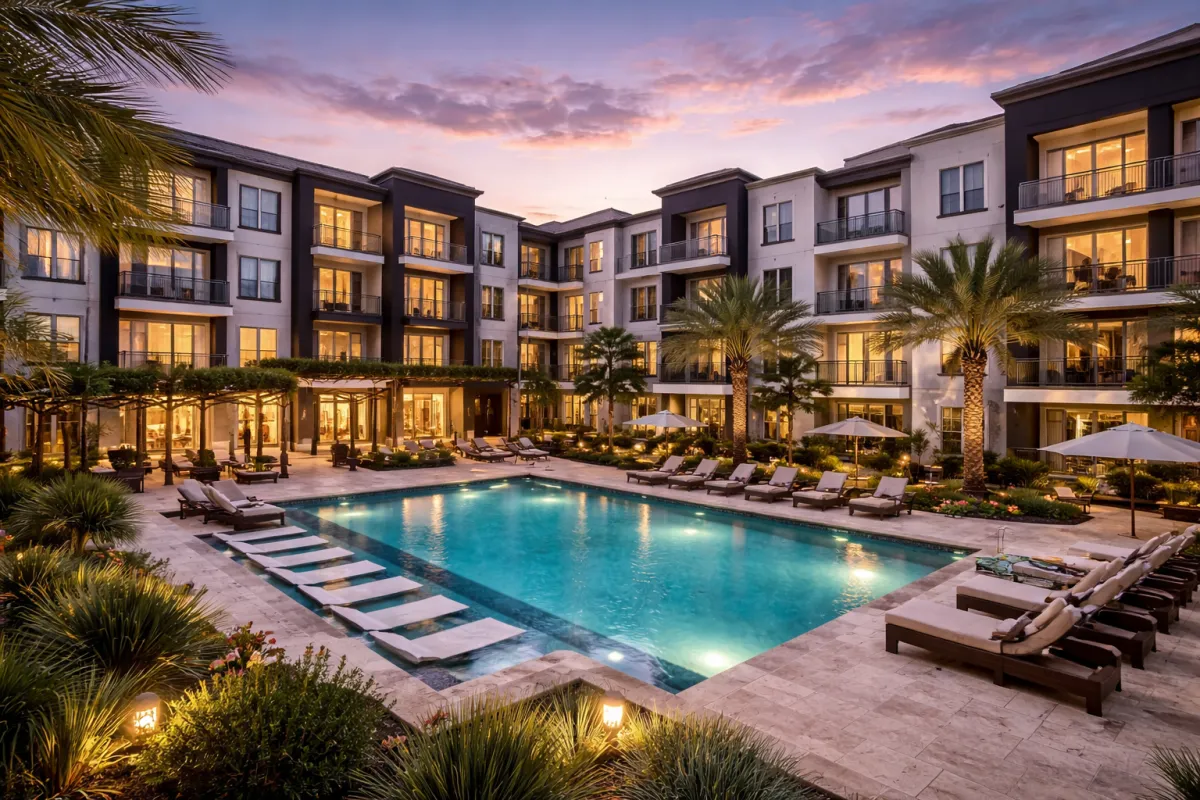
Amenity levels are approached with an eye for people. Private residents should not be captured without consent. Luminis Media listing photography avoids identifiable faces by using long exposures where movement blurs naturally, or by planning around quieter windows. Pool decks, fitness rooms, and lobby art installations each get a wide anchor frame and a couple of detail frames. A sculptural light fixture, a concierge desk with curated books, a pool tile pattern, these touches help buyers remember a building.
Blue hour exterior work closes the day. If the building reads best from across a boulevard or from an overpass, a scout finds legal, safe positions. Houston police are generally accommodating when you are visibly working and not blocking sidewalks. Tripods are weighted because gusts do come up with evening temperature shifts.
Balancing truth and polish
MLS rules require that photos represent the property accurately. Ethical practice matters, and it also prevents a jarring experience at showings. Luminis Media MLS photography follows a few guardrails. Power lines and permanent features stay. Temporary clutter can be removed. Broken blinds stay unless repaired before the shoot. Window views are presented as they look at the time of day chosen, with exposure balanced so they are visible but not unrealistically saturated. For renovations that are not complete, a single labeled rendering can supplement photos if the MLS allows it, but virtual staging is disclosed.
The polish comes from timing, angles, and small styling touches that respect the space. Throw pillows are squared, cords are tucked, and counter surfaces are curated to one or two items. In a luxury condo, less is more. The finishes should breathe.
How video changes the pace of a digital showing
Still photography drives clicks. Video extends attention. Luminis.media real estate videography is designed around three beats. Opening seconds establish place with aerial context and a slow pan on an architectural element, like a carved lobby wall or truss detail. The middle section follows a logical path through the unit, using gimbal movement and gentle parallax to suggest space without inducing motion sickness. The final beat lands on the view at the time of day when it sings, either a golden hour balcony or a blue hour city glow.
Audio is restrained. Music cues are neutral and modern. Narration is used when a building has a story that matters, such as a noteworthy architect or a unique amenity like a private dining club. On MLS, videos often must be hosted and linked rather than embedded. File delivery includes a short social clip, a vertical cut for reels, and a branded long cut for broker channels. Real estate videography luminis.media prioritizes pace and restraint so that a buyer feels guided, not sold to.
Case snapshots from recent towers
A penthouse in Museum District struggled online with owner-taken photos that leaned blue and clipped the skyline. The agent brought in Luminis Media listing photography for a reshoot. The team waited for a cloudy-bright day so the humidity softened reflections. Interiors were built from a base of warm ambient frames. The dining room, which had been impossible to photograph without the photographer’s reflection in a mirrored niche, was shot with a slightly off-axis position and a flagged light that nudged a highlight across the edge of the mirror without revealing the camera. The hero image became a twilight wide on the balcony with the lights of the Menil campus and the outline of downtown in the distance. Showings accelerated within a week, and seller feedback focused on how the unit finally felt the way it did in person.
In the Galleria, a mid-level corner unit faced heavy traffic noise. We cannot photograph away sound, but we can tell the right story. The team built a set that emphasized double pane glass and the cocoon quality of the interior. The amenity level, with co-working lounges and a quiet reading room, received extra coverage. A drone oblique at 180 feet showed perimeter trees and the distance from the Loop. Buyers arrived primed for what the unit offered: city energy outside, calm inside.
A River Oaks building with strict drone policies required creative ground-based context. Luminis Media aerial real estate photography was replaced with high vantage shots from a neighboring garage, secured with permission. The compositions still returned a sense of the canopy of trees and the sweep toward the bayou. The board appreciated the compliance, and the visuals held their ground against competing listings that used generic skyline stock.
The technical details that separate good from exceptional
Color management is a quiet differentiator. Houston designers favor layered neutrals with warm brass and light oak. Cameras often default to cooler profiles that push oak toward gray. Luminis Media MLS photography sets a custom white balance on site, then refines it in post with controlled adjustments in the HSL panel rather than a global shift. This keeps wall paint loyal and makes metal finishes read correctly. Blues in exterior windows are kept within realistic saturation so the sky does not steal attention from interior finishes.
Sharpness and noise control are tuned for MLS compression. Many platforms compress aggressively, which can turn fine grain into blotchiness. The export pipeline uses a restrained sharpening pass and a bit more luminance noise reduction than print would require, resulting in smoother gradients on mobile screens.
Compositions follow a rule of intent, not a rigid rule of thirds. If a room features a line of pendant lights that rhythmically define a kitchen island, a centered composition can feel more architectural. In tight bedrooms, a corner angle flattens space, so a single wall composition with a long lens can do more to show the relationship between bed, window, and view.
For drone footage, neutral density filters are essential in Houston sunlight. Keeping shutter speed at roughly double the frame rate retains natural motion in trees and traffic. High sun aerials look sterile. Whenever possible, aerials are scheduled for early mornings when shadows carve shape into facades, or late day when color warms.
Staging for glass, stone, and skyline
Luxury condos reflect everything. A top sheet that is not tight will ripple like a lake in a wide shot. Marble that has not been wiped will show every streak. Luminis Media’s crews carry microfiber cloths and glycerin-free cleaning solution, and they will spend the first minutes quietly tuning surfaces. A chrome faucet with a gentle highlight gives a bathroom a hotel feel. A smudged one reads less expensive than it is. On balconies, a single plant with clean leaves is more effective than a crowded arrangement that fights the view.
Art placement issues often arise. If a unit features large reflective art opposite windows, a camera will catch hotspots. The solution is often simple. Angle the art slightly or pull sheer curtains just enough to diffuse the blast. These are temporary styling moves that do not alter the owner’s decor, but they give the camera the conditions it needs.
Comparing aerial options for towers
Aerial options have costs, permissions, and visual outcomes that differ. Agents often ask whether drone shots are always worth it. The answer depends on the building and its rules.
- True drone flight captures unique angles and movement, ideal for exterior story and amenity decks. Rooftop vantage points deliver stability and quality without flight variables when access is granted. Neighboring garage decks provide mid-level context and a sense of neighborhood textures. Street-level telephotos compress distance to tie a facade to skyline backdrops without leaving the ground. Helicopter flights are rare, reserved for marquee listings where broader skyline coverage is part of the pitch.
Each option has its time. Luminis Media drone real estate photography is often the first choice, but alternatives can be just as effective when managed thoughtfully.
Working with building management and HOAs
Every tower has its own culture. Some are hands-off. Others have formal photography policies and concierge logs. A smooth day starts with the right introductions. Luminis Media coordinates with property managers to secure elevator times and to understand photo restrictions, especially during blue hour when traffic in lobbies increases. Concierge teams are briefed. Residents are respected, and no identifiable images are used without written permission. For drones, many HOAs prohibit lifts from balconies. This is respected, and pilots plan takeoffs from public right-of-way or pre-approved rooftop areas when allowed. A professional relationship here has dividends. When the next listing comes up in the same building, doors open more easily.
Pricing conversations that focus on value, not volume
It is tempting to chase the longest photo set. More frames do not always equal better marketing. For MLS, 25 to 40 final images is a practical target for a two bedroom, sometimes fewer for a minimalist space. The aim is a set where each frame earns its place. Luminis Media listing photography packages scale by scope. Interiors only, interiors plus amenities, and full packages with aerials and video. Agents value predictability. That includes clear travel fees for out-of-core areas and transparent reschedule policies when weather forces a change. Houston’s storms can roll in quickly. A vendor who can move a twilight slot to the next evening without fuss is worth keeping on speed dial.
What buyers respond to, based on thousands of frames
After countless shoots, patterns emerge. Buyers pause on images where sightlines are clear. A kitchen that opens to a living room and then to a skyline view keeps eyes moving forward. Close-ups help when they explain craftsmanship, like dovetail joints or stone veining that wraps at corners. But macro shots are used sparingly. They punctuate a set rather than dominate it.
Views are king, but they must be honest. If a unit looks into another building, the right angle and time of day can soften that reality without hiding it. A view framed through strategic interior elements, like the edge of a sofa or a plant, can carry quiet sophistication. Overly aggressive lens choices that stretch rooms are a turnoff. A buyer who arrives and finds the bedroom half the apparent size from the photos is less likely to trust the rest of the listing.
How Luminis Media integrates with an agent’s launch plan
Photography is a piece of a broader go-to-market. MLS photography Luminis Media integrates timelines with staging, copywriting, and list date. For a Friday launch, interiors are captured midweek, amenities and aerials at twilight the same day or the next, and finals delivered within 24 to 48 hours. A teaser image is selected for social channels. Captions are coordinated so details line up, from ceiling heights to parking spaces. For out-of-town sellers, a remote walkthrough is offered after the shoot via quick video clips so clients feel part of the process.
For buildings with multiple similar units, luminis.media MLS photography builds a shared visual language, then tweaks compositions to highlight each unit’s differentiators. Corner units get more emphasis on intersecting views. Mid-stack units get tighter shots that celebrate finishes and staging. This balance avoids visual fatigue on the MLS page while maintaining brand consistency for the building.
When to reshoot, and when to live with it
Weather is a partner. Some days it will not cooperate. A twilight soaked by heavy cloud cover can produce a muddy blue. If the listing relies on that glow, it is worth rescheduling. If the unit itself carries the story, the set can live without a perfect exterior and be bolstered with a title slide that explains blue hour shots are scheduled and will be added. Sellers appreciate the candor and the plan.
Seasonal shifts in Houston change the look of trees and the quality of air. If a listing sits longer than expected and the initial set shows a different season, consider a refresh with updated amenity exteriors. Small updates can reset online interest without repeating the entire process.
A last word on craft and care
High-rise photography rewards patience and precision. You win with small decisions made over and over. Choosing the right minute of blue hour. Keeping a reflection off a range hood. Letting a marble island look like stone, not plastic. Luminis Media MLS photography is built on that mindset. The same holds for Luminis Media aerial real estate photography and the quiet pacing of luminis.media real estate videography. Each delivers a version of the truth that flatters while keeping faith with what a buyer will see at a showing.
For agents, the takeaway is simple. Choose partners who know Houston’s towers, who respect building rules, and who can move quickly when the weather turns or a seller’s calendar shifts. Luxury buyers are decisive. When the visuals rise to meet them, offers often follow. And when the listing is archived months later, those images still stand up, a record of a space, a view, and a moment when the city glowed just right.